
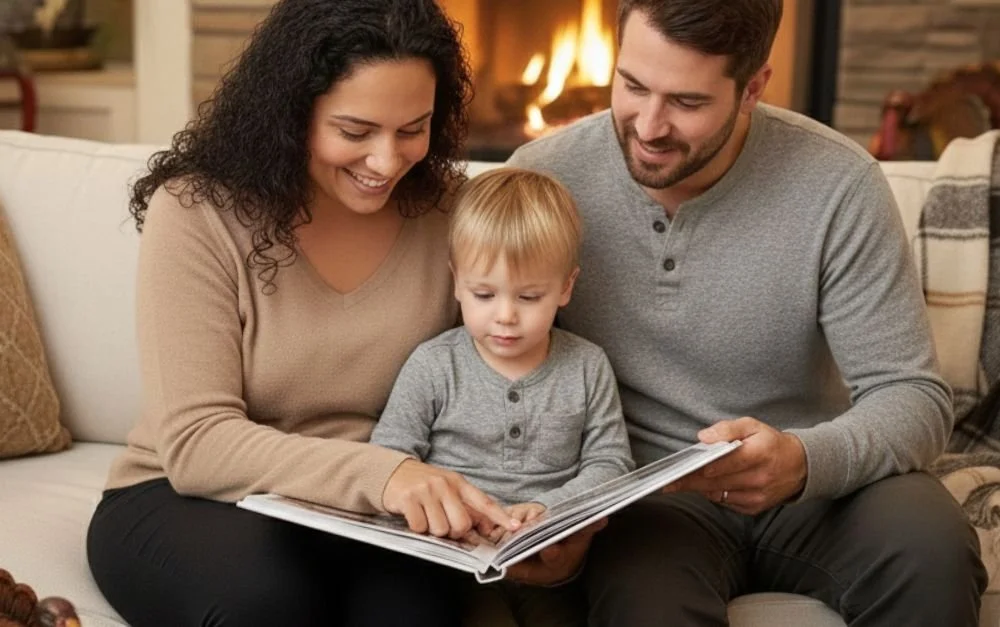
5 Ways Your Photo Albums Can Help Your Kids Practice Gratitude This Thanksgiving 💛
Real talk: I used to stress about teaching my kids gratitude "the right way."
Then one rainy afternoon last year, I pulled out our family albums. Not for any particular reason - just to look at them.
My daughter wandered over, curious. And for the next 45 minutes, she was completely absorbed.
"Oh, I remember this!" "Wait, I did that?" "Can you tell me about this one?"
She pointed at photos of her first day of kindergarten (terrified), then first grade (confident).
The camping trip where everything went wrong but we laughed anyway.
The ordinary Tuesday morning breakfast that somehow made it into the album.
And it hit me: The gratitude practice was already done. It was just sitting on the shelf.
Your Albums Are Already Teaching Gratitude (You Just Didn't Know It)
Here's what most parenting articles won't tell you: You don't need another worksheet or craft project to teach your kids gratitude.
Your photo albums - the ones on your shelf (or, honestly, the ones still on your phone waiting to be printed) are already doing the work.
They're not just pretty books. They're teaching tools. Memory anchors. Gratitude practices in physical form.
And this Thanksgiving? They might be exactly what you need.
Here are five specific ways to use your family albums to help your kids practice real, meaningful gratitude - the kind that goes deeper than "I'm thankful for my toys."
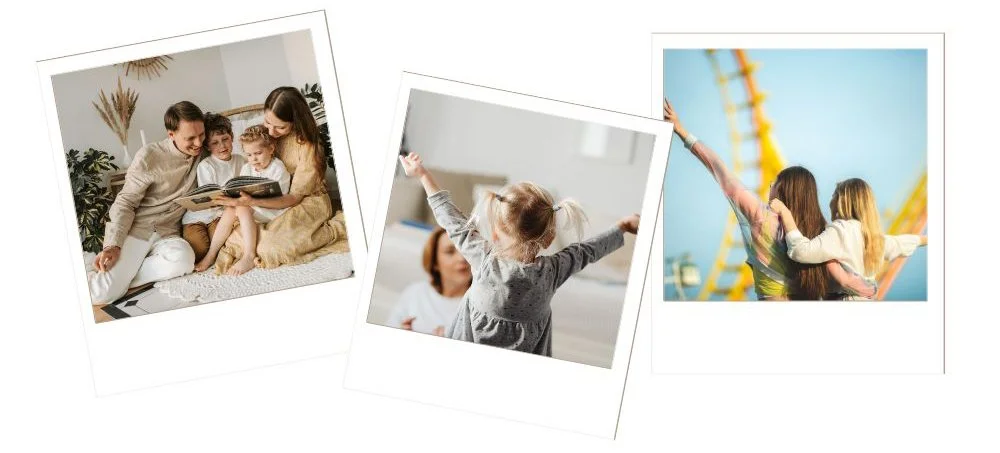
1. Create a Visual Gratitude List
Before Thanksgiving dinner (or after, or any time this week when you have 15 minutes), pull out your albums from the last year or so. Sit down with your kids - phones away, distractions minimized - and just look through them together.
Then ask: "What are you most grateful for from this year/trip (etc)?"
Why this works:
Kids often need to SEE memories to access the feelings attached to them.
Ask a seven-year-old what they're grateful for, and you'll get generic answers: "My family. My dog. My toys."
But show them a photo of that soccer game where they scored their first goal?
Suddenly they remember how proud they felt. How nervous they were before. How their whole team cheered.
Show them the beach day photo?
They can practically smell the sunscreen and taste the watermelon. They remember building that sandcastle with Dad. How the waves were scary at first but then weren't.
Photos make gratitude concrete instead of abstract.
Try this:
Give your kids a stack of small sticky notes or flags. As you look through the album together, let them mark their favorite moments - the ones they're especially grateful for.
Those flagged pages? They become your conversation starters at Thanksgiving dinner. 🙌
Instead of going around the table with vague "I'm thankful for..." statements, you can say: "Remember this moment? Tell everyone why you picked this one."
Watch how much more engaged and specific their answers become.
2. Practice "Roses and Thorns" with Proof
You probably know the "roses and thorns" dinner game - everyone shares their rose (something good) and their thorn (something hard) from the day, week, or year.
This Thanksgiving, do it with your albums open.
Look for moments of challenge followed by moments of triumph. The evidence of hard things that didn't stay hard forever.
Why this works:
One of the most powerful forms of gratitude is recognizing your own resilience. The ability to say: "That was hard. But I did it. And I'm stronger because of it."
But kids don't automatically make those connections. They might need some support to see the arc of a challenge overcome.
Photos provide the proof.
"Remember when you were absolutely terrified to start swim lessons? Look - here's week one, clinging to the wall. And here's you two months later, jumping off the diving board. You did that. You were brave even when you were scared."
Or: "This was the week Grandma was in the hospital and we were all worried. But look - here we are visiting her. And here's when she came home. We got through the scary part together."
The lesson:
When kids can see visual evidence that they've overcome hard things before, they build confidence in their ability to handle hard things in the future.
They learn that a "thorn" doesn't define the whole story. That struggle and gratitude can exist in the same narrative.
That's resilience. And it's one of the greatest gifts you can give them.
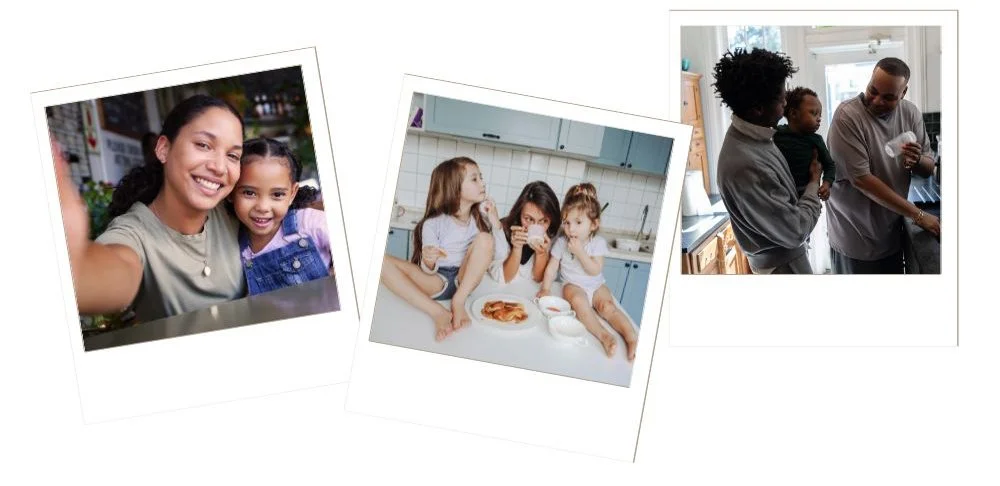
3. Identify the People Who Show Up
As you flip through your albums together, play "I Spy" with people instead of objects.
"Who do you see a lot in our photos?"
"Who's been there for the big stuff AND the regular stuff?"
"Who always makes you laugh?"
Why this works:
Gratitude isn't just for stuff. It's for people. For presence. For the humans who show up - not just for birthdays and holidays, but for Tuesday afternoons and hard weeks and ordinary moments.
When you look through an album together, those patterns become visible:
Grandma at every single soccer game
Uncle Joe who always gets down on the floor to play with them
The neighbor who taught them to ride a bike and checked on their progress every day
The friend who was there during the hard stuff, not just the fun stuff
The lesson:
Photos teach kids that love is spelled T-I-M-E. That the people who matter most are the ones who keep showing up.
And when kids can name those people - when they can point to the visual evidence of consistent presence - they learn a deeper form of gratitude.
Not just "I'm thankful for my grandma" but "I'm thankful that Grandma comes to all my games even when it's cold and she doesn't really like soccer that much."
That's specific. That's real.
That's the kind of gratitude that shapes how they'll show up for others someday.
Bonus tip:
This is also a beautiful way to talk about people who aren't at your Thanksgiving table this year. (More on that in #5.)
4. Celebrate the Ordinary Magic
Look specifically for photos of regular, unremarkable moments. The ones that almost didn't make it into the album because they seemed "too boring."
Saturday morning pancakes. Playing in the backyard. Reading before bed. Movie night on the couch. Walking the dog. Making cookies together.
Point them out. Talk about them. Let your kids remember them.
Why this works:
We spend a lot of time teaching kids to be grateful for the big things: birthdays, holidays, vacations, presents.
And sure, those are lovely. But here's what we know from memory research: The moments that end up mattering most aren't usually the big expensive ones.
They're the small, repeated, ordinary moments that create the texture of a happy childhood.
The way Mom always dances while making breakfast.
How Dad does funny voices when reading bedtime stories.
Saturday morning snuggles.
The specific way your family does pizza night.
These feel like nothing when they're happening. But they're everything.
The lesson:
Photos help kids notice the magic hiding in the ordinary.
They teach them that a good life isn't built from big moments. It's built from small moments, repeated with people you love.
When kids learn to be grateful for the ordinary, they learn to find joy anywhere and understand that contentment lives in the everyday.
That's a life skill that will serve them forever.
5. Remember People Who Aren't at the Table
This one's harder…but important.
If there's someone missing from your Thanksgiving table this year, whether they passed away, live far away, or your relationship changed, photos give you a way to include them in the conversation.
"Grandpa isn't here this year, but look - remember how he always fell asleep in this chair after dinner?"
"Aunt Sarah's in California this Thanksgiving, but here's when she visited last summer. Should we call her after dinner?"
Why this works:
One of the most mature forms of gratitude is being able to hold two feelings at once: thankful AND sad. Grateful AND grieving.
Photos create space for both.
They let you say: "I'm so grateful we had this person in our life" while simultaneously acknowledging "and I miss them terribly."
For kids especially, this is crucial. They need permission to feel complicated things. To be happy at Thanksgiving while also missing someone. To feel grateful for memories while wishing for more time.
The lesson:
When you use photos to remember people who aren't present, you teach kids:
That it's okay to talk about people we've lost
That gratitude doesn't erase grief (and grief doesn't erase gratitude)
That the people we love remain part of our story even when they can't be at the table
That remembering is an act of love
This is sophisticated emotional work. And albums make it accessible, even for young kids.
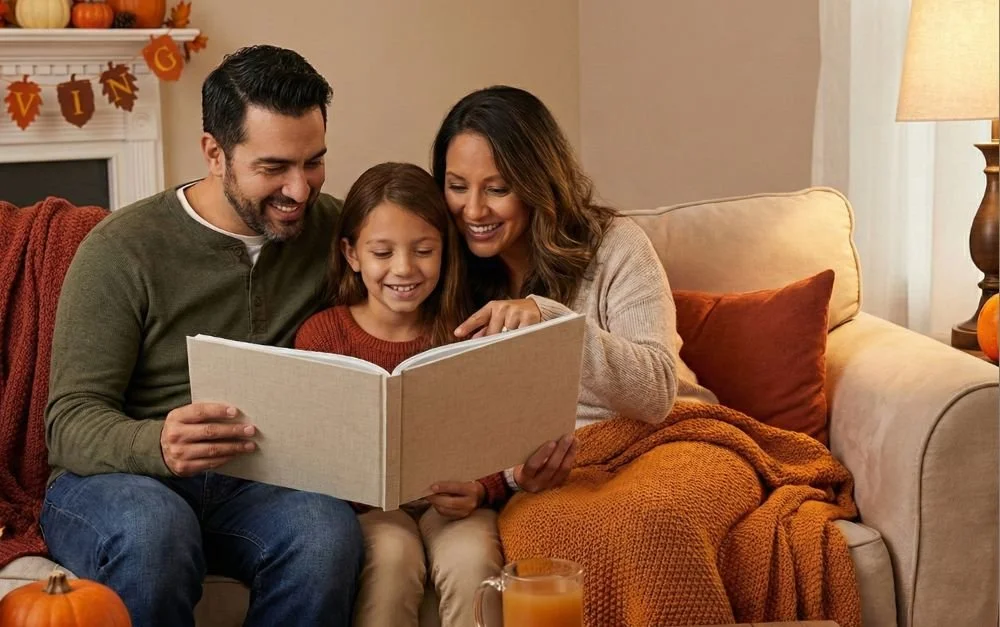
The Real Gift Your Photos Give
Here's what I've come to understand after watching families look through their albums together:
Your photo albums aren't just about the past. They're about right now.
They help your kids understand: This is our story. These are our people. This is what matters.
They create a narrative thread that says: "We overcome hard things. We show up for each other. We find joy in ordinary moments. We remember what's important."
That's not just gratitude practice.
It's building a sense of belonging. ?
It's giving kids roots and a story they're proud to be part of.
And all of that happens in the 15 minutes you spend looking through photos together before Thanksgiving dinner.
So This Thanksgiving, Try This:
Pull out your albums. Sit down with your kids. Look through them together.
Ask the questions:
What are you most grateful for?
What hard things did we overcome?
Who shows up for us?
What ordinary moments do you love?
Who do you wish could be here?
Let the memories spark the conversations.
That's what they're there for. 💛
A Final Thought (From One Parent to Another)
I know you're busy. I know Thanksgiving week is already overwhelming. I know you might be thinking "I don't have time to add one more thing."
But here's the beautiful part: This isn't adding something. It's using what you already have. Your memories are already captured (probably thousands of them on your phone right now).
And if you're thinking "Yeah, but all my photos are still on my phone and the thought of organizing them makes me want to cry….
Hi! That's why we exist! At Shortcake Albums, we take your photo chaos and turn it into beautiful, tangible albums - without you having to spend your weekends sorting through files or second-guessing design choices.
You share your photos and tell us your story. We do everything else.
Because your memories deserve better than a camera roll.
And your kids deserve to be able to hold their childhood in their hands.
What's one memory from this year you're especially grateful for? I'd love to hear about it in the comments below.
And if you try any of these gratitude practices with your albums this Thanksgiving, please come back and tell me how it went, or DM me on Instagram @shortcakealbums. I genuinely love hearing these stories. 💛
Happy Thanksgiving, friend. May your table be full, your photos be plenty, and your kids remember more than they think they will.